Showing posts with label Off the Stacks. Show all posts

Friday, December 05, 2014

2014 in Books

I have spent the last few days devouring podcasts and articles about the best books of 2014. I haven't heard of many of the books discussed, but that doesn't stop me from greedily marking off new books to read and nodding with satisfaction at some of the choices.

I got a little thrill of delight to discover that I had read 4 of the New York Times Top 10 list for the year, and that there were among my favorite books of the year. They included:

All the Light We Cannot See by Anthony Doerr: I think this one may be on every single roundup of the year that I've seen--definitely a general audience pleaser.  I read it on my trip to Seattle for my grandmother's funeral in September. And I just got it to give to my mom for Christmas. Set mostly in Brittany, France, and a mining town in Germany, Doerr masterfully shifts between two stories.  Werner lives with his sister in an orphanage, and is destined to become a mine worker until he discovers his talent for constructing and repairing radios. He is recruited to become part of the Hitler Youth, where he develops a way to track down Allied forces who surreptitiously broadcast low frequency radio messages.   Marie-Laure is a blind French girl who is forced to flee with her father to a great uncle's home in Brittany during the invasion of Paris. Her father has devoted his career to working as the lockmaster at the Natural History Museuem. In order to nurture his blind daughter independence, he builds her scale replicas of their neighborhoods that provide her with the visual map necessary to navigate on her own.  Eventually, their paths meet up.  The writing is gorgeous and the characters shimmer in front of you. Wonderful.

Dept. of Speculation by Jenny Offill: I read this one twice in quick succession when AJ was out of
town with the boys and MJ was at band camp. I had biked around the lake and over to Chipotle and then brought my food to the neighboring park to sit and eat and read. The narrator is an unnamed woman who gets married, has a baby, struggles to maintain a writing career, and then to understand her failing marriage. The narration has a scattershot feel, a deliberate choice by Offill to help us understand her anxieties, frustrations, and anger. There are a few neat narrative tricks that were quite satisfying. And I liked this from the Amazon review: the novel "shimmers with rage and longing and wit." I also really enjoyed listening to the Slate book discussion about it.


Can't We Talk About Something More Pleasant? by Roz Chast. This one also drew me in and I sat and devoured most of it in one sitting. Roz Chast, the New Yorker cartoonist, has written a graphic novel memoir  about her and her parents as they  declined in health, suffered dementia, moved out of their Brooklyn residence of 50 years to an assisted living facility, and then eventually died in their 90's. As the only child, she feels a great deal of stress and anxiety in trying to care for them and deal with many momentous decisions, while at the same time confronting her conflicted feelings in particular about her mother. It is heartbreaking, genuine, and sublime.


The Sixth Extinction by Elizabeth Kolbert. I love Elizabeth Kolbert's environmental writing for the New Yorker, and this book expands on her work there. It turns out, as she aptly documents, that the world is in the midst of a massive dying out of many species due to rapid changes in the earth's atmosphere, oceans, and climate--populations of frogs in Central America, bats, coral, and rhinos are rapidly declining. She combines writing about the scientific discoveries around extinction and other historically relevant episodes with fascinating science reporting about what is being done to try to prevent species devastation. So so good. I absolutely loved her description of diving at the Great Barrier Reef, and am determined to go there someday before it completely disintegrates due to ocean acidification.

My other favorites from the year: This is the Story of a Happy Marriage, a collection of essays by Ann Patchett, The Invention of Wings by Sue Monk Kidd, and The Goldfinch by Donna Tartt.
Read more . . .

Wednesday, April 13, 2011

Anna Quindlen on Reading

And a book provides what it always has: a haven. I remember the first year after my second child was born, what I can remember of it at all, as a year of disarary, of overturned glasses of milk, of toys on the floor, of hours from sunrise to sunset that were horribly busy but filled with what, at the end of the day, seemed like absolutely nothing at all. What saved my sanity were books. What saved my sanity from disappearing, if only for fifteen minutes before I inevitably began to nod off in bed, into the dark and placid English rooms of Anita Brookner's newest novel, into the convoluted plots of Elmore Leonard's latest thriller, into one of my old favorites, Breakfast at Tiffany's, Goodbye, Columbus, Our Mutual Friend, Wuthering Heights. The romantic ramblings of Heathcliff make a piquant counterpoint to dirty diapers, that's for sure. And as it was for me when I was young and surrounded by siblings, as it is today when I am surrounded by children, reading continues to provide an escape from a crowded house into an imaginary room of one's own.

---From How Reading Changed My Life


Read more . . .

Monday, July 26, 2010

The Hand that First Held Mine

I have gotten away from blogging about books. Between work and kids and house and time with AJ, most of my blogging time has gotten sapped away. I have been doing a fair amount of reading, though, and happily have been on a streak of good reads.

Anyway. I have been enjoying several books that fit in to the Women Unbound Challenge. The Hand that First Held Mine by Maggie O'Farrell wasn't one that I jumped into, thinking it would be a good fit for the challenge. I expected a nice summer novel, which is was, but there were some interesting descriptions of motherhood that made me think (again) about my experiences as a mother compared with how other women experience mothering.

In this novel, O'Farrell deftly weaves together two stories. The first centers on Lexie, a non-traditional woman who literally throws off the conventional life of her parents by leaving home to go make her fortune in post-war London. There she finds work, and also love, and finally she finds a calling as a journalist. She loves what she does, she is good at it, and she makes a life for herself. When she finds herself unexpectedly pregnant, she decides to raise her child on her own terms. She juggles work and the care of her son, and finds herself with a fierce love and connection to her son.

In the second story, set in contemporary London, Elina, an artist, has just given birth to a child. She has barely survived a traumatic birth and is struggling to recover physically at the same time she must care for a newborn. During this same period, Ted, her boyfriend and father of the child, is going through a painful process of remembering snatches of his childhood. He has always had a memory filled with gaps, but now he starts to remember images and voices. Through the course of the story, the mystery of his past unwinds and connects with the Lexie strand to a satisfying conclusion.

The theme that is the same between the stories is the powerful relationship between a mother and her young child. O'Farrell describes the powerful and physical love of both mothers, as well as the strong and almost unthinking intuition that drives them to care for and protect their children. "Elina is on her feet before she's even aware of moving" as she gets up to care for her baby. Ted is amazed at the way that Elina can calm the crying Jonah the way no one else, including him, can. "She has been unprepared for this fierce spring in her, this feeling that isn't covered by the word 'love', which is far too small for it, that sometimes she thinks she might faint with the urgency of her feeling for him, that sometimes she misses him desperately even when he is right there, that it's like a form of madness, of possession, that often she has to creep into the room when he has fallen asleep just to look at him, to check, to whisper to him."

Elina's experience with a newborn is mirrored by Lexie's:
When she leave the house on these mornings, she senses a thread that runs between her and her son, and as she walks away through the streets she is aware of it unspooling, bit by bit. By the end of the day, she feels utterly unravelled, almost mad with desire to be back with him, and she urges the Tube train to rattle faster through the tunnels, to speed over the rails, to get her back to her child as quickly as possible. It takes a while, once she's there with him, to wind herself back to rightness, to get the thread back to where it out to be--a length of no more than a couple of feet or so feels best, Lexie decides.

These descriptions of mothering do not overwhelm the story, and I found myself really liking the book, in spite of not being able to entirely identify with these feelings both mothers have. I don't doubt that women feel like this, but I never felt quite so strongly about my babies. Yes, there was infatuation. There were many moments of delight and awe in getting to know them and in being around them. But, I always felt replaceable (save for breast feeding) by AJ. He always could care for them at least as ably as I. And I felt that there was nothing special about my femaleness that gave me the mothering gene. Maybe that's overstating it, but that's my recollection. I always, since the time I was a young adult, have questioned my lack of intuition that is supposed to go hand in hand with the XX chromosome, and I certainly never felt any extra intuition with my children. If anything, the "intuition" that I thought I had turned out to be completely wrong.

Anyway, because I have always felt a bit at odds with traditional descriptions of what the mothering experience is like for women, I have wondered if one version is held up to the light to the exclusion of many women's experiences, or if many or even most women feel something like this.

Read more . . .

Monday, May 10, 2010

The solace of books

Z-Man has been a little sick. The other day, he completely fell apart and AJ whisked off to his bed for an immediate nap. He was sobbing, disconsolate, in his bed. A few minutes later I went in to try to calm him down. His face was soaked with tears, snot, and a whole lot of sweat thrown in there too. I hugged him and he immediately asked me for his froggy blanket that he had thrown out of his bed in the hot blush of first anger, which had quickly melted into remorse. I asked him if there was anything else he wanted, to which he replied, "I want a book."

My heart melted. Yes, little boy, books can bring you comfort.

I gave him three (though I couldn't find the hippo book he requested) and he snuggled up with them and went to sleep.
Read more . . .

Tuesday, May 04, 2010

What We're Reading This Week

The Z-Man is really starting to talk. He still mimics a lot, but also has a lot to say on his own. One of my favorite things to hear him say is "I go libree! I go libree!" And whenever we pull into the parking lot of the library, he cheers, "Lay! Lay!" (His Y's sound like L's.)

For all of my parental weaknesses and issues, I feel good about the way that my kids are embracing books and reading. Our house is overflowing with books. I recently got a new bookshelf for my bedroom mainly because the kid books were taking over a corner of the room. On the shelves sit two boxes with all the board books, plus another big box of library books and other picture books. We sit on my bed or in the reading chair in my room and read a lot. My kids know that if they ask me to read a book with them, I will almost always agree. This compares with the other things they might ask me to do which I am more likely to turn them down. In my opinion, there's nothing better than snuggling up with a child to read a book. And I'm really excited about the way T's reading is taking off.


Taking a page from the NPR book page, this is what we're reading this week.


Z-Man: He still loves Sesame Street books with Elmo and Zoe. He has pretty much mastered his colors save for blue, but still loves to name them. He is starting to be interested in ABC and counting books. He has also taken quite a shine to Mercy Watson books (see below), or at least to the pictures in Mercy Watson book.


T--This week, we discovered the Tiny Titans graphic novels. I don't really like them, but after we read some together, T sat and read on his own with this one. MJ and some kids from the neighborhood set up a library in our garage, and T "checked out" Fantastic Mr Fox yesterday. He read on his own for quite a while today, proudly stating that he got to page 65 as he was going to bed. I could hear him laughing as he was reading. One of our favorites to read together is Mercy Watson about a pig with a single minded devotion to butter who is being raised like a child by Mr and Mrs Watson. T's favorite character is the cowboy thief and then later reformed criminal Leroy Ninker. We are all excited to go hear the author, Kate DeCamillo, speak and get her autograph next month.


MJ--MJ is in 3rd grade, attending school with 5th and 6th graders. Her school was overflowing, and so this year, they moved the 3rd and 4th grade to the intermediate school. The library there is full of materials that are suited for slightly older kids. She is a good reader, but it really bugs me when she comes home with book after crappy book of Sweet Valley Twins , including stories about first kisses, boyfriends, and getting your period. These are the younger sister of Sweet Valley High books, of which, I admit, I read a few. I am trying to get her to check out other books from her school library and am happy that that the public library doesn't have these books. In addition to Sweet Valley, she is working on Harry Potter and the Deathly Hallows. She also is reading Katie Kazoo and The Magician's Elephant (also to be autographed by Ms DeCamillo).


AJ is probably the least prolific reader in the family in terms of books read, but I am happy that he has plodded through a couple of books in the past couple of months. He is currently working on Michael Chabon's Manhood for Amateurs and earlier in the year read and loved Michael Pollen's Omnivore's Dilemma.


As for me. I have read a lot of mediocre books in the last little while, but things took a turn for the better with Strength in What Remains--the story of a Burundi refugee who leaves during the 1994 genocide and later ends up at Columbia and Dartmouth universities to study medicine--and The Guersey Literary and Potato Peel Pie Society. I read this for book group. It was pretty good, a nice story, a little on the fluffy feel-good side. But the title is terrible. I can never say it properly. And I just started listening to Game Change, which looks to be a really interesting and fun look at the craziness of the 2008 election.


Read more . . .

Monday, March 15, 2010

Montaigne on Reading


The commerce of book goes side by side with me in my whole course, and everywhere is assisting to me; it comforts me in my age and solitude; it eases me of a troublesome weight of idleness, and it delivers me at all hours from company I dislike; and it blunts the points of griefs if there are not extreme, and have got an entire possession of my soul. To divert myself from a troublesome fancy 'tis but to run to my books; they presently fix me to them, and drive the other out of my thoughts; they always receive me with the same kindness.


Wow, I think I need to commit that to memory!
Read more . . .

Thursday, February 04, 2010

Half the Sky

Kristof and WuDunn travel through Asia and Africa, meeting women, listening to their stories, watching them deal with terrible plights, and occasionally seeing resilience and hope shine through their tragedy. By interspersing the personal stories of these women with statistics, they have written Half the Sky, a compelling book that urges the reader to consider the high costs of continued discrimination, neglect, and abuse to women worldwide. Their intent is to move their audience beyond their comfortable armchair, to a world almost unknown in a Western country, to see and understand, and then to act--to do something to make the world a better place for women worldwide.

They cover a range of topics, including forced prostitution, honor killings, the prevalence of maternal mortality (the image of a midwife jumping on the belly of a laboring women still haunts me), and the promise of education and microlending to poor women and the difficulty at times in accessing them.

One interesting issue they bring up is the way that traditions oppressive to girls are maintained by women themselves--for example, genital mutilation. It is the mothers that force their daughters through this ritual in order to protect them from promescuity and preserve the family name. Zoya, another women, whose smile shines out from the pages of the book, claims that husband beating is perfectly legitimate when "the wife in not taking care of her husband or is not obedient." She is one that has left her husband and her in-laws--she is one that has worked to liberate herself from a terrible situation, but still she cannot fathom that a husband does not have the right to beat his wife when she will not obey.

Kristof and WuDunn state

Women themselves absorb and transmit misogynistic values, just as men do. This is not a tidy world of tyrannical men and victimized women, but a messier realm of oppressive social customs adhered to by men and women alike.


As documented elsewhere, I saw again the reduction of women to their reproductive function, resulting in the control of parents and husbands over their daughters and wives: the hymen checks before marriage, the honor induced suicides by a woman after she was raped, the raping of women from opposing tribes during war as a way to humiliate and intimidate the men.

Many of their stories of hope that Kristof and WuDunn share come from local women who have successfully overcome a difficult situation, and have now risen to help other girls and women--including starting microlending programs, finding ways to keep girls in school, helping girls start new lives after escaping from forced prostitution, and helping women to have save and healthy pregnancies and deliveries. Kristof and WuDunn believe that unleashing girls and women from the obstacles and traditions that hold them back is not only a moral necessity, but an economic one as well that will benefit families, towns, countries, and even the global economy.

I am motivated to talk with my kids more about the kinds of issues that women face throughout the world. I am also going to sit down with MJ and open a Kiva account with her (it's been on my list of good intentions for a long time now) and let her pick a women she would like to loan money to. And I'm going to comb through the resources on their website and find something to personally commit to.
Read more . . .

Thursday, January 07, 2010

Best of 2009

I haven't done a good job chronicling and reviewing books here like I used to. I want to try to go back to my roots and do more of that, but for now, here are my favorite reads of 2009.


Crossing to Safety by Wallace Stegner. This was my first Stegner. It's the memorable and gripping and searing story of two couples who met in Madison and then remained close friends over many years. Stegner does an amazing job portraying the four characters. And Charity still haunts me. This would be great for a book group.

All God's Creatures Have a Place in the Choir by Laurel Thatcher Ulrich and Emma Lou Thayne. I read this one in the spring, right around the time I went to a retreat and met Claudia Bushman, a colleague of Laurel Thatcher Ulrich. That was probably the high point of my year. I love LTU--she is a hero of mine. This is a book of personal essays about being female and Mormon, about friendship, sisterhood, and community, about motherhood and writing. Like any collection of essays, there were some that were more personally meaningful to me, but this is such a great compilation of Emma Lou Thayne's and Laurel Thatcher Ulrich's writing, and bubbles over with the richness of their lives and their thoughtful insights. In its totality, their book celebrates women's gifts, not as anything generically applied to all with XX chromosomes, but individual woman's gifts and contributions, unique and precious, and ultimately beneficial to the community at large, no matter the shape of their talents.

The Handmaid's Tale by Margaret Atwood. When I heard the premise of this book, I was skeptical. It sounded like it would be a feminist screed cloaked in a badly fitting story. But, Atwood is an amazing storyteller and she develops the dytopian world that the handmaid precariously navigates. As a member of a society that has almost lost its ability to reproduce due to a terrible environmental disaster, the few women who can still bear children become very important to the theocratic state. These are the handmaids--named after the women in the Old Testament who stepped in to bear children for the patriarchs when their wives were infertile. Atwood utilizes a narrative device that tells a portion of the handmaid's story through her own diary that has been discovered many years hence. Her current name is Offred because she now belongs to a powerful man named Fred. I also read Oryx and Crake this year, and enjoyed it as well, though it spoke more to environmental devastation than to issues around gender.

My Life in France by Julia Child. I loved the film Julie and Julia and saw it with a good friend this summer. I was moved by the story of Julia Child and the way she was able to define and create a life for herself. So, I picked up her memoir and Child's wit, pragmatism, and personality, her sense of humor and her embrace of life shine through. She has such a descriptive way with words and it was a pure pleasure to read. The best of her book is the first half when she and her husband Paul are living in Paris and when she discovers her passion for cooking. I love that she was a bit older (late 30's) when she discovers France and its food, but that when she does, she embraces it so heartily and fully that it powerfully shapes the rest of her life.

An Exact Replica of a Figment of My Imagination by Elizabeth McCracken. This slim volume is a gem--an exquisitely, beautifully written memoir of a stillbirth. Elizabeth McCracken and her kind, earnest English husband are living in the countryside of France, both working on writing. She is radiantly pregnant, the adorable baby shoes have been purchased, and they have created a vision of their future life with their baby boy nicknamed Pudding. From the very beginning, McCracken lets us in on what will happen. Both her stillborn son, and the living, healthy child that will be born almost exactly a year later. But, the unraveling. Oh, the tragic and painful unraveling. I read this one twice because it was so beautifully written.

The Hunger Games by Suzanne Collins. What do I say about this one? I loved the story and the creativity of it. I loved Katniss and I loved Rue. I thought Collins did a great job making the characters real in this book (and was disappointed with Catching Fire--I didn't think it was the same power as Hunger Games).

When Everything Changed: The Amazing Journey of American Women from 1960 to the Present by Gail Collins. I went to hear Collins speak on her book tour. It was at a dark time of my year--I was so depressed and felt so heavy in such a physical way. I loved hearing her speak and felt myself spark at her ideas and her painstaking research. She has written a great overview of all the things that have changed for women in the US since 1960. Collins is a journalist, and this book is very readable, packed full of stories of women, based mainly on interviews. She covers both the history-making events (Betty Friedan and The Feminine Mystique, the founding of NOW, the ERA, etc), as well as the more mundane (clothing, day to day life).

The Help by Kathryn Stockett. I don't care if the critics turn their nose up at this book, I loved it. Stockett's characters are so vibrant, so real. I felt like I knew every single one of them. What a topic--the revolutionary action of recording black women's voices and stories. I loved how Stockett portrayed the diversity of characters across both the black and white women. It felt authentic. There was the villainous and bigoted Hilly, yes, but there was also the conflicted, self-centered, and bullied Elizabeth, depressed Lou Anne who credited her maid with helping her get out of bed every day, and of course, Skeeter, one of the heros of the book. And then Aibileen, the other hero--I think she was my favorite character. I loved the way she took care of Elizabeth's daughter, Mae Mobley, and countered the effects of her mother's negligence. And Minny--the sassy maid who can cook like anything, taking care of the trampy Celia. Really wonderful.

Here's to many wonderful reads in 2010!

Read more . . .

Sunday, January 03, 2010

Lost in Translation Update

Back in January, I decided I would read 6 books translated from other languages this year.

Here's how it went.

I started out the year reading Inkdeath by Cornelia Funke, translated by Anthea Bell. After loving both Inkspell and Inkheart, this was a big disappointment. It was slow, it wasn't captivating, and it was way too long. A bad way to start.


Then, in about May, I read Ghosts by Cesar Aira, translated by Chris Andrews. Here's what Publisher's Weekly had to say about it:

Aira, an unusual Argentinean author (How I Became a Nun), writes a compelling novel about a migrant Chilean family living in an apartment house under construction in Buenos Aires. New Year's Eve finds the hard-drinking Chilean night watchman, Raúl Vinas, hosting a party with his wife, Elisa, their four small children and Elisa's pensive 15-year-old daughter, Patri. Moreover, ghosts reside in the house: naked, dust-covered floating men, mostly unseen except by Elisa and Patri. The novel engineers a clever layering of metaphorical details about the building, but gradually focuses on Elisa's preparations for the party and her conversations with her daughter about finding a real man to marry. Prodded perhaps by her isolation within the family, Patri accepts the ghosts' invitation to a midnight feast, at her life's peril. Aira takes off on fanciful sociological analogies that seem absurd in the mouths of these simple folk, so that in the end the novel functions as an allegorical, albeit touching, comment on his characters' materialism and class.


Yes, it was curious. Too much for my taste. I don't know if this falls in the magical realism genre. Or if it was just too literary for me. But, I didn't really like it.

With two strikes against me, I didn't jump into any other works in translation until the end of the year. Then, with a lingering deadline, I thought maybe I could still make it work.

I read the highly touted Elegance of the Hedgehog by Muriel Barbery, translated by Alison Anderson, which seems to be something a lot of book bloggers have read and many have loved. I almost gave up on it several times, because the first 100 pages were soooo slow and way too much philosophizing. If I had had anything else to read at the gym one day, I wouldn't have finished it. As it was, it turned out to be pretty good.

Here's what I said on GoodReads about it.

In part 2, it finally started picking up and engaging me. It's the story of Renee, a woman in Paris who is a concierge to a building full of rich and elitist tenants, who are also intellectually barren and incurious. She spends her free time reading Marx and studying phenomenology with her Tolstoy named cat as only companion, hiding her mind in an attempt to not step outside of prescribed class barriers.

When she meets Mr Ozu, a new resident (the first new resident in the building in 20 years! What kind of stifling and rigid kind of place is this?), she finds a like minded friend. The section where they identify the true nature of each other is charming--Renee underhandedly quotes Anna Karenina, but not without Mr Ozu's recognition and then reciprocation. Though she enjoys conversation and meals with him, finally able to reveal her true self to another, she continues to struggle internally to truly accept a friendship with someone from such a different background.

This is also the story of a precocious and intelligent 12 year old Paloma, daughter of
some tenants, who is unhappy, not able to share her true self with her family. She builds a friendship with both Mr Ozu and Renee and is able to find hope and goodness that has previously eluded her. Both she and Renee pour out their thoughts in diary form, which is how the entirety of the book is written.

As for the title, which has been so alluring to me: "Madame Michel (Renee) has the elegance of the hedgehog: on the outside, she's covered in quills, a real fortress, but my gut feeling is that on the inside, she has the same simple refinement as the hedgehog: a deceptively indolent little creature, fiercely solitary--and terribly elegant."


Then, I read Here's to You Jesusa by Elena Poniatowska, translated by Deanna Heikkinen. It started out strong, but I ended up really disliking it. Another disappointment

From my GoodReads:

Here's To You, Jesusa! chronicles the life of Jesusa, a tough, argumentative, spirited, and pragmatic Mexican women who was a young adult during the Revolution. The book is in her voice, and she goes from one ordeal to the other, always managing to come out on top, no matter how challenging. She is very poor and doesn't settle down anywhere for long, so the book skips around quite a bit. This made it hard to read-- it didn't hold together very well for me, and I skimmed through some of it, and eventually stopped reading with 70 pages left.

I understand that Poniatowska was trying to capture an authentic poor Mexican woman's voice, but I would have like a bit more self examination into how all these events shaped the woman Jesusa was. (For example, the death of her mother when she was young, her father inability to stay in one place for long, an abusive step-mother.) It's all descriptive, but not much more.

The book starts out with a forward by the middle class woman who supposedly finds Jesusa somehow and then spends years interviewing her and learning her story, and who then writes a book about her life. I loved this part and would have liked to see more interplay between the "author" voice and Jesusa.


So, with completing four books, I gave up. I have a few more on my to-read list for next year, so I'm not giving up altogether, but I guess I didn't too well with the selection. That, or maybe I'm just an unsophisticated American through and through and can't really appreciate translated works.

Read more . . .
Saturday, November 21, 2009

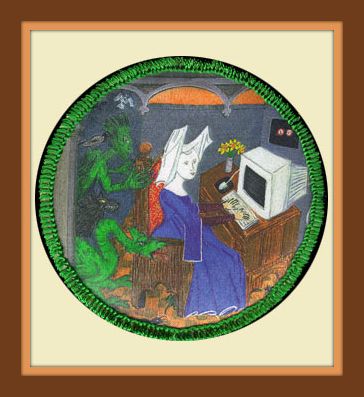
Women Unbound, A Preliminary Reading List

The guidelines for this challenge are simple: select and read any nonfiction and fiction books related to the rather broad topic of ‘women’s studies.’ The dates for the challenge are Nov 2009 to Nov 2010.

I'm going for the Suffragette level. That makes me think of my favorite song from Mary Poppins: "Our daughter's daughters will adore us, and they'll sing in grateful chorus, Well done! Well done! Well done Sister Suffragette!" Suffragette also brings to mind Elizabeth Cady Stanton, one of my feminist heroes. To become a Suffragette myself, I need to read 8 books that fall in the women's studies category. Fun, fun!

Here are my initial ideas.

Non-Fiction
A Midwife's Tale: The of Martha Ballard, Based on Her Diary, 1785-1812
by Laurel Thatcher Ulrich: Ulrich, a historian, uses the personal diaries of Martha Ballard to draw conclusions on larger themes of women's status and issues in the early days of the US. Ulrich's Well Behaved Women Seldom Make History is one of my all time favorite books and Ulrich herself is one of my feminist heroes.

The Book of the City of Ladies
by Christine de Pizan: This is one of the earliest feminist texts and in it, de Pizan confronts 14th century misogyny head on. By constructing an allegorical city of ladies (I love this idea), she showcases the strengths of all sorts of different women--saints, warriors, scholars, artists, and prophetesses.

The Dance of the Dissident Daughter
by Sue Monk Kidd: This is a memoir where Kidd details her search for the divine feminine.

Maria Mitchell and the Sexing of Science: An Astronomer Among the American Romantics
by Renee Bergland: Mitchell was an astronomer and intellectual in 19th century New England. This quotations of hers is fabulous: “The woman who has peculiar gifts has a definite line marked out for her, and the call from God to do his work in the field of scientific investigation may be as imperative as that which calls the missionary into the moral field or the mother into the family . . . The question whether women have the capacity for original investigation in science is simply idle until equal opportunity is given them."

The Hemingses of Monticello
by Annette Gordon-Reed: I've heard a lot about this one since it won the National Book Award in 2008. Here, Gordon-Reed resurrects Sally Hemings and her children with Thomas Jefferson who have been systematically erased from history.

Half the Sky: Turning Oppression Into Opportunity for Women Worldwide
by Nicolas Kristof and Sheryl WuDunn: This is a brand new book written by Kristof, of the Op-Ed page from the NYT and his wife, WuDunn, also a journalist. Here, they argue for investment into the education and autonomy of women throughout the developing world. This looks to be a great read.

When Everything Changed: The Amazing Journey of American Women from 1960 to the Present
by Gail Collins: Also a brand new book, also by a Op-Ed columnist from the NYT. Collins focuses on the domestic situation of women over the past 50 years and how it has changed. I have been looking for an account of the women's movement. I am also hoping for an answer to the question: "Was there really as much sexism in the 1960's as they show on Mad Men?"

Good Girls, Bad Girls: The Enduring Lessons of Twelve Women of the Old Testament by T.J. Wray: I found this at a garage sale this summer, a pristine hardback for $1. Gotta love that! In this book, Wray writes about 12 women from the Old Testament, presenting them in historical context, providing a more nuanced view than the traditional Angel-Whore divide, and drawing lessons for the contemporary reader.

Fiction

Mrs Dalloway
by Virginia Woolf: A classic. I haven't read much Woolf and thought this would be a good place to start.

Vindication
by Frances Sherwood: A fictionalization of the life of Mary Wollstonecraft, another early feminist who wrote A Vindication on the Rights of Women in 1792 to lay out her case for female independence. And while I'm at it, how about I read Wollstonecraft herself? Maybe, maybe.


The Yellow Wallpaper
by Charlotte Perkins Gilman
: Gilman was a leading feminist intellectual of the early 20th century, and after she suffered a severe bout of PPD, she wrote this about a woman who feels the yellow wallpaper of her room start to close in on her.

Something by Margaret Atwood--I loved The Handmaid's Tale, so I will be searching for another of her feminist novels.

Read more . . .

Friday, November 20, 2009

Women Unbound

Women Unbound. A reading challenge. Sign me up!

A meme to start.

1. What does feminism mean to you?

A feminist for me is simply someone who supports equal rights and opportunities for women. There are many strains of feminism, but I think this definition is what it boils down to for me. A friend of mine believes that activism is a necessary part of feminism, and while that may be true on a movement-wide level, I don't think that those who are feminists must also be activists.

2. Do you consider yourself a feminist? Why or why not?

Yes! My willingness to look at the world around me through a gendered lens is a key to why I self-identify as a feminist (And it's also, to my chagrin, often my inability! to not see gender everywhere). I also like to be a feminist in different communities where many consider feminists to be evil, ill-guided, or just plain angry and bitchy. I am non-threatening. I love my husband. And I am Mormon. I can still be an advocate for women without falling into all the old saws about what feminists are like. I think that someone like me can help others who are put off by radical feminists (either known or only imagined) to think about issues around gender that are taken for granted.

I try not to be the embittered feminist that cannot talk about anything but gender, but it feels so good to completely unload with a like minded friend who I can trust completely.

3. What do you consider the biggest obstacle women face in the world today? Has that obstacle changed over time, or does it basically remain the same?

This is a hard question, because the issues that concern me personally as a women in middle class America are so different from the issues that are important for women in developing countries and in other situations different from me. So, instead of trying to be specific, I will just say that the main obstacle that women face world wide is to simply being able to fulfill their potentials as individuals and members of the human race without being handicapped by their sex. And, yes, this is the same challenge that has existed forever for women.

This is a generic answer, vague enough that perhaps it has very little meaning, but I hope to delve more deeply into different circumstances and experiences throughout the year.


Read more . . .

Thursday, October 15, 2009

Gail Collins in Person

On Tuesday, I was listening to our public radio station and heard that Gail Collins was coming to town and that Kerri Miller would be interviewing her in a live forum about her new book. I literally ran to the phone to get tickets.

#1 reason to go--The topic and the author: Collins is a NYTimes Op Ed columnist and has written several books, including America's Women, which I read a couple of years ago and really liked (a perfect birthday present from AJ). Her new book is about the women's movement and all that has happened since 1960--When Everything Changed.

#2 reason to go--Kerri Miller. She is the host of a two hour MPR program and is engaging and great to listen to. In all the different places we've lived, I've listened to lots of different local public radio hosts and she is one of the best. She beats Marty Moss-Coane, hands down. Her voice is so familiar, it was a bit surreal to see her as she was speaking.

#3 reason to go--I could leave the house and all domestic responsibilities to AJ. I needed to leave.

#4 reason to go--Gail Collins could sign her book. I'm not a big one for collecting autographs, and I thought I would just wait to get her book from the library, but she was so engaging, so interesting, so fun to listen to that I plunked down my $30.12 on the spot to buy the book from a local independent book seller that was on site, and then stood in line to chat with her and get her to sign my book. And darn it if I didn't forget my copy of America's Women.

Read more . . .

Sunday, May 10, 2009

Women's Voices

It's Mother's Day and I've enjoyed handmade cards, a shirt with my kids' pictures on it, and some handmade jewelry. We ate a delicious dinner (I wonder if I can grow fennel in my back yard...I love fennel), complete with a scrumptious chocolate chip cake. I got to take a walk around the lake and read my book. I wasn't upset by Mother's Day talks. I talked to my mom. The only wrinkle: my Mother's Day present to myself hasn't yet arrived from Amazon.

I also wanted to spend some time writing today. Earlier this year, I had such big plans. I was all set with reading for African American History month in February, and being overly optimistic, I planned some reading for Women's History month in March. Well, that didn't work out like I wanted, but I have read some interesting things since then and thought Mother's Day would be as good a time as any to write a few thoughts. I wanted to read about women's lives and experiences. I wanted to hear women's voices. Yes, such a broad objective, so that many things fit.

There were two books that were disappointing. I'll start with them since I don't have much to say about them. Things I've Been Silent About by Azar Nafisi. I listened to her do a book reading and an interview and I was interested to read her newest book about her life in Iran and her experiences with her mother and other family. The book was disjointed, the focus on her controlling mother became tiresome, and I lost interest quickly.

And Monique and the Mango Rains by Kris Halloway. This was the memoir of a Peace Corps Volunteer who spent two years in Mali working with a midwife on maternal and child health. I was interested in the topic, but the writing was flat. It didn't resonate with me nearly as much as another book about poverty and health that I read around the same time--Mountains Beyond Mountains. More on that in another post.

How about a book about Abigail Adams? She's an intriguing historical figure and I was interested to learn more about her after watching (part of) the HBO series on John Adams. Portia: The World of Abigail Adams by Edith Gelles was a collection of academic essays. It felt like each could have been published as an individual paper. Gelles' intention was to write about Abigail completely on her own terms, rather than constantly linking her life and destiny to her famous husband. I thought that to be a bold claim, for so much of Abigail's life was shaped through her relationship with John. How could she be considered independently of him? But Gelles does a pretty good job looking at certain topics that have been ignored by other scholars. By analyzing Abigail's prolific correspondence, she writes about Abigail's relationship with her daughter, with her sisters, and with Thomas Jefferson. She examines the way scholarship about Abigail has changed over time. Abigail had a brilliant mind and was a prolific writer and voracious reader. Writing, for her, was a way to work through issues, to make arguments, and to conduct business with her often absent husband. She said, "There are particular times when I feel such an uneasiness...my pen in my only pleasure." Portia was a penname that she adopted and used to sign many of her letters. She identified herself with Portia, the wife of the Roman politician Brutus.

I liked this bit from a letter written to her by her younger sister Elizabeth:

If ideas present themselves to my mind, it is too much like the good seed sown among thorns; they are soon crazed and swallowed up by the wants and noise of my family and children. The bad writing you must impute to my rocking the cradle.

A sentiment I can relate to.

An Exact Replica of a Figment of My Imagination is Elizabeth McCracken's beautifully written memoir of the stillbirth of her son. She and her kind, earnest English husband are living in the countryside of France, both working on writing. She is radiantly pregnant, the adorable baby shoes have been purchased, and they have created a vision of their future life with their baby boy nicknamed Pudding. From the very beginning, McCracken lets us in on what will happen. Both her stillborn son, and the living, healthy child that will be born almost exactly a year later. But, the unraveling. Oh, the tragic and painful unraveling.
Here's one section from early on:

I had just stepped over the border from happy pregnancy to grief, but I could still see that better, blither country, could smell the air over my shoulder, could remember my fluency there, the dumb jokes, the gestures, the disappointing cuisine, the rarefied climate. I knew already I could never go back, not then, not for any future pregnancy (should I be so lucky).


The sections on interacting with those who are suffering grief should be required reading for everyone. Here's a little bit.

I remember one lunch with people who had loved us in London early on, two of the most excruciating hours of my life. Nothing but that endless juggling: Other people's jobs and boyfriends. What kind of wine to order. This was two weeks after Pudding died. I might have been something like that gothic character one step short of total ruin: I wanted to rock and sing lullabies and hold out my torn, bloody nightgown and run my hands through my wild hair, and yet I knew you weren't supposed to do such things in polite society. My hair was uncombed, and my face was puffy from lack of sleep and crying and too much wine, and my clothes were what I'd salvaged from the middle of my pregnancy, because of course even though people might pretend nothing was out of the ordinary I had the body of a woman two weeks postpartum, soft and wide around the middle, and if I'd been one step worse off I might have lifted up my shirt to display my still livid stretch marks.

But, I didn't. I could feel how uncomfortable my mere presence made people feel, and I couldn't bear it. So, I sat in this Indian restaurant and listened. Sometimes, a piece of palaver came loose and shot straight toward me and somehow I caught it and tossed it back.

All the while, all I could think was: Dead baby dead baby dead baby.


And finally, All God's Critters Got a Place in the Choir by Laurel Thatcher Ulrich and Emma Lour Thayne. This is a book of essays about being female and Mormon, about friendship, sisterhood, and community, about motherhood and writing. Like any collection of essays, there were some that were more personally meaningful to me, but this is such a great compilation of their writing. Like Abigail Adams, they both describe their absolute need to write. Emma Lou Thayne is a poet and author and Laurel Thatcher Ulrich is a historian. But, this book contains their personal lives, bubbling over with the richness of their lives and their thoughtful insights.

Early on, Ulrich talks about gifts and talents. "I have come to believe that talent is a inner drive that propels a person to take time." The title of the book comes from a song:

All God's critters got a place in the choir--
Some sing low; some sing higher,
Some sing out loud on the telephone wire,
And some just clap their hands,
Or paws
Or anything they got.

It brings to mind a group of people, all working together for a common objective, but each utilizing their own unique gifts and abilities. The first few chapters filled me with such optimism about using my own talents in a way that both helps me grow them, and contributes to some larger good.

The essays that make up the bulk of the book are filled with experiences from their lives--dealing with cranky neighbors, watching a mother die, going visiting teaching, raising children, and connecting with women across the globe.

In its totality, their book celebrates women's gifts, not as anything generically applied to all with XX chromosomes, but each individual woman's gifts and contributions, unique and precious. For example, Ulrich describes herself this way: "As a daughter of God, I claim the right to all my gifts. I am a mother, an intellectual, a skeptic, a believer, a crafter of cookies and words." Her own identity as a daughter of God, different from any other.
Read more . . .

Monday, April 27, 2009

I Have a Problem

I hardly ever buy new books for myself, especially hardbacks. They're just too expensive. Plus, I like to make sure that I want a copy of a book for keeps before I actually spend all that money on it. That means I check out a copy from the library, and if it's something I want in my book collection, then I'll buy it.

A while back, I discovered the joys of shopping for used books online. With Amazon z-shops, I can usually find a book in good condition for a decent price, but there's always that pesky $3.99 shipping fee. For certain kinds of books that I can't find elsewhere, I'll gladly pay the shipping and enjoy them coming straight to my door. I've gotten a lot of great books this way.

I also love to peruse used book stores. But, even they can't usually compete with the online used book market. A good price for a book there is usually about half the price you could buy it new. It's also hard to really browse in a big used bookstore. I can zero in on specific books I want to look for, but I get overwhelmed just looking around.

Enter thrift stores. I have been taken loads of old clothes and other items I want to recycle to a non-profit thrift store in the area. Usually I just pull around back and drop the bags off. However, I have taken to looking through the book section several times now. A big bonus--it's small enough that I can look at everything. The inventory is constantly changing. And it's exciting to discover something interesting that I didn't even know I wanted. Prices are usually less that $2. Plus, if I pick up a dud, I can get rid of it and not feel cheated out of any significant amount of money.

What treasures I have found! Right after reading Their Eyes Were Watching God for January book group, I found a pristine copy for 50 cents. I snatched it up. I have found some great collections of feminist writings, an edited book of women's autobiographical writings, and some great novels.

On Saturday, I took the opportunity to drop some bags off by myself--it's become harder to browse with baby Z who likes to throw books from the shelves willy nilly. I spent 20 or so minutes and came away with these titles, all for $8 or so:

Mrs Dalloway by Virginia Woolf--hardback, looks like it has hardly been cracked open
The Handmaid's Tale by Margaret Atwood--an old school paperback copy, perfect for taking on vacation
The Whistling Season by Ivan Doig--my mom read this book and loved it and I have been wanting to read something by him for a while now. A brand new hardback.
Angle of Repose by Wallace Stegner--another one that's been on my list for a while now
From This Day Forward by Cokie and Steve Roberts. Another hardback in perfect condition. Although I have this on paperback on my shelf, I couldn't pass it up. I just need to find someone who can appreciate it.
Magyk--Septimus Heap Volume 1. For MJ.
Because of Winn-Dixie by Kate DiCamillo. Another one for the kid book shelf.

My to-read shelf is almost completely full though. I've got to stop buying these books! But, they are so alluring with their pretty faces and the unknown stories beneath their covers...

Read more . . .

With Kindle, Can You Tell It’s Proust?


From the NYTimes

Another reason that I don't like Kindles. How can I see what other people are reading?? It's my favorite snobby spy activity. What can I deduce about someone from their reading material? I do it at the gym, the doctor's office, and on vacation.

Some of my favorite quotations from the article:

The practice of judging people by the covers of their books is old and time-honored. And the Kindle, which looks kind of like a giant white calculator, is the technology equivalent of a plain brown wrapper.

But for the purpose of sizing up a stranger from afar, perhaps the biggest problem with Kindle or its kin is the camouflage factor: when no one can tell what you’re reading, how can you make it clear that you’re poring over the new Lincoln biography as opposed to, say, “He’s Just Not That Into You”?

Michael Silverblatt, host of the weekly public radio show “Bookworm,” uses the term “literary desire” to describe the attraction that comes with seeing a stranger reading your favorite book or author. “When I was a teenager waiting in line for a film showing at the Museum of Modern Art and someone was carrying a book I loved, I would start to have fantasies about being best friends or lovers with that person,” he said.

Ah, I can relate to that last bit. If I saw someone reading one of five or so books, I would immediately introduce myself and set up a lunch. Because, of course, this person would be my new best friend.

(Hmm. That would be a great tool on GoodReads. Each person can select five books, or a cluster of a certain kind of book. Their favorite, central-to-my-identity books. If someone within 50 miles of your geographic location marks it as "read" and has given it 4 or 5 stars, they I am notified by email.)


Read more . . .

Sunday, March 22, 2009

African American History Month


February is long gone, but I have just finished my African American reading project. I read Their Eyes Were Watching God in January and that inspired me to do some more reading.

The non-fiction choices were mostly busts. The Shipler book was overwhelmingly large, and the intro didn’t draw me in. Combine that with my sister in town and the non-negotiable inter-library loan due date, and I didn’t give it much of a chance at all. Sorry Maryanne!

I tried a book on race and institutional churches in the US written by sociologists—they suggest that multiracial congregations are an answer to race problems in the country--but found it uninteresting.

And then, I started Mauss’s treatise on changing racial conceptions in Mormonism. It was dense, and I didn’t have the time to commit to it, so it also went back to the library when it came due. I'll have to try that one again later.

The other non-fiction that I tried went down a little bit better. There was the recently published memoir of a girl not much older than me that grew up in a rich California suburb, surrounded by white neighbors. And I read a lot of Du Bois’s sociological classic The Souls of Black Folks.

The fiction that I read:

Toni Morrison’s Beloved. An amazing story about the long lasting effects of slavery. Morrison has a complicated writing style in this book, and the story slowly unravels from the present to the past and then back again until all the pieces are put together. Sethe was born into slavery, and then as a young woman, escaped. But, she is plagued by the memories of life on Sweet Farm, as well as the ghost of her dead daughter. I wish I would have known that there was a supernatural/fantastical aspect to the story. I kept waiting for the mystery of the identity of Beloved to resolve in some logical way, but it never did. I plan to read more Morrison.

Lalita Tademy’s Cane River. The back story behind this one is most fascinating. Tademy was working as a high powered executive in the Bay area when she became obsessed with her family history. This book is the fictionalized account of 4 generations of women, starting with Elizabeth, who were born into slavery on the Cane River in Creole Louisiana. In the introduction, Tademy describes the way that she felt these four women, and in particular her great-grandmother Philomene, urging her on in her research and writing and in the desire that she felt to tell their stories. I would like to read the memoir version of this. Several of these women had white fathers, to the effect of "the bleaching of the color-line" in the words of one of the family matriarchs. Although in many cases, these men provided land and money for their families, they were legally prevented from giving land to their children or marrying their children's mother. In the story of Tademy's grandmother Emily, this leads to a particularly tragic end.

Alice Walker’s The Color Purple. Like Beloved, a Pulitzer winner. I didn't like this one nearly as much, but enjoyed the voice of Celie. The book in written in the form of letters, so Celie's voice is the only one the reader gets to hear for the first half of the book. Then, we get some letters from Nettie, Celie's sister, to provide a contrasting voice. This is a story about the redeeming power of love, friendship, and writing. My favorite line: "I'm poor, I'm black, I may be ugly... but I'm here."

and A Raisin in the Sun, the play by Lorraine Hansberry. I saw a production of this on Friday night, and was so taken with it that I went and got the script so that I could read it. This is the story of a three-generation family in Chicago in the 1950's. The grandmother Lina is the head of the household and the play begins with her about to receive $10,000 insurance money from the death of her husband. The title is taken from Langston Hughes' poem, which wonders about what happens to deferred dreams. In the play, various family member struggle to fulfill their dreams, often to the detriment of each other. And in particular, the drama concerns the battle for the soul and identity of Lina's son, Walter Jr. From a NYTimes review of a 25th anniversary (1983) production:
She (Hansberry) posed all her concerns in a work that portrayed a black family with a greater realism and complexity than had ever been previously seen on an American stage. A writer of unlimited compassion, Miss Hansberry believed that all people must be measured, as she put it, by both their "hills and valleys."

This is a story about redemption and love.

I really liked hearing the distinct voices of black women in these stories. The women portrayed are often poor and seen as basically worthless by society, or at least suspicious characters. Their color alone made them worthy of dismissal at best, abuse at worst. Yet, the authors give life to their stories and make them three dimensional human beings, with dreams and agency and hard times too.

A couple of other general thoughts:

Hierarchy. In these works, white, rich men in these works hold the most power. Black poor women the least. If a black woman has a lighter shade of skin, she is higher up on the ladder than a woman with darker skin. Lighter black women shouldn't marry darker black men. What is it in human nature that makes us so often order everyone?


Empathy. If I had to theorize, I would have said that those people who have been excluded or oppressed by others would be more likely to have empathy for others that are excluded or oppressed. But, that is not necessarily the case, at least here. People who have been dominated and oppressed want to also dominate and exclude. In Baszile's memoir, she recounts a story from her childhood. Once she and her sister became accepted in their neighborhood, they used their social power to exclude another child. Du Bois's essays are full of the way that black men have been emasculated. The language is male-centric. Although he wants black men to be the social and legal equals of white men, he doesn't think that black women should be the equals of black men. (This was also shown in Ulrich's book: abolitionists did not automatically jump on the bandwagon for women's rights.)

Hair. In Baszile's book, the measures black women go to to straighten their hair are incredible. Hair comes up in Raisin too. The character from Africa calls treated hair "mutilated" and the lye treatment Baszile describes does seem like a kind of torture.

Read more . . .

Monday, March 02, 2009

More on My Life With the Saints


Well, I haven't finished this yet, but I need to return to the library stat. It is several days overdue, but because superdesign sister was in town last week, I didn't have much time to read or do anything else except to make my house prettier. More on that later. I'll have to finish this book another time. Each chapter--a profile of a saint with the author's experiences woven in--can stand alone, so it will be easy to pick up again.

Mormons look down on the Catholic practice of sainthood and praying to saints. As a missionary, I heard it compared to idol worship. Mormons believe in only praying to God the Father. But, I like Martin's introduction which explains his relationship to and feelings about saints.

First, he describes them as models of discipleship, each one individual, with a unique mission. "Each saint was holy in his or her unique way, revealing how God celebrates individuality. As CS Lewis writes in Mere Christianity: 'How monotonously alike all the great tyrants and conquerors have been: how gloriously different are the saints.' " As Martin learned about the lives of the saints, he studied not only their miracles and saintliness, but also their foibles and struggles, which in turn encouraged him in his weaknesses.

He also describes the saints as companions who can encourage us along the way. "Why not accept the gift of their friendship and devotion? And there's no reason to feel as if devotion to the saints somehow takes away from your devotion to Jesus: everything the saints say and do is centered on Christ and points us in his direction."

In some ways, his view of saints reminds me of how Mormons think about angels (except that there aren't nearly as many famous angels for Mormons as there are saints for Catholics). But Mormons believe that there are people who work for our benefit beyond the veil of earth, who can help us and comfort us, and who we could even talk to. We wouldn't call this praying to them, but prayer is a form of communication.

Here are a few other things that I liked from this book.

From a prayer by Thomas Merton:
My Lord God, I have no idea where I am going. I do not see the road ahead of me. I cannot know for certain where it will end. Nor do I really know myself, and the fact that I think I am following your will does not mean that I am actually doing so. But I believe that the desire to please you does in fact please you.

St Ignatius detailed a way of praying called the examination of conscience or the examen, after the Spanish word Ignatius used. He describes this way of communicating with God as a prayer of awareness, that helps God's presence to be more noticed in everyday life. These are the five steps.

1. Ask God to be with you
2. Recall the events of the day for which you feel grateful. These can be anything--small or large. "Offering gratitude help you recognize God's presence in these moments."
3. A review of the day. "Here you try to notice God's presence in the day, seeking an awareness of where you accepted (or did not accept) God's grace. I like to think of this as a movie of the day being replayed. When you recall someone offering you a kind work, you might say to yourself, "Yes, there was God." Conversely, when you recall treating someone with disrespect, you might say, "Yes, there I turned away from God."
4. Asking for forgiveness of any sins
5. Asking for the grace to follow God more closely during the following day.

Martin profiles quite a few saints, and a lot of them are women, including Joan of Arc, Mary, Dorothy Day, and Mother Teresa among other. I like that saints can be women as well as men, and I liked the stories he told about them.

A good read. I was impressed and inspired multiple times in reading what I did.

Read more . . .

Friday, February 20, 2009

My Life With the Saints

I've only just started this, but am captivated. In this book, a Jesuit priest writes about how various saints have influenced his life in varied circumstances.

A couple of things I have really liked so far:

This is from his introduction--

Gradually, I found myself growing fonder of these saints and developing a tenderness toward them. I began to see them as models of holiness relevant to contemporary believers, and to understand the remarkable ways that God works in the life of individuals. Each saint was holy in his or her unique way, revealing how God celebrates individuality.


And he quotes Walt Whitman:
Do I contradict myself?
Very well then I contradict myself.
(I am large, I contain multitudes.)


Read more . . .

Tuesday, February 10, 2009

Unaccustomed Earth

Unaccustomed Earth by Jhumpa Lahiri has gotten a lot of critical acclaim, rightly deserved. I enjoyed her newest collection of short stories. They were exquisitely crafted, but mostly depressing. They weren't really about immigrations, but more about immigrants and the cultural disconnect that occurs between generations, as well as between those that leave their country (India, in this case) and those that remain.


She takes her title from a passage by Nathaniel Hawthorne:

Human nature will not flourish, any more than a potato, if it be planted and replanted, for too long a series of generations, in the same worn-out soil. My children have had other birthplaces, and so far as their fortunes may be within my control, shall strike their roots into unaccustomed earth.


However, it seemed to be that none of her characters really flourished in their unaccustomed earth, so I wondered about the title. A NYTimes reviewer theorizes that it isn't so much a statement as a question for Lahiri. "Is it true that transplanting strengthens the plant? Or can such experiments produce mixed outcomes?"

In the end, while the stories are beautifully written, I found them depressing. Maybe I'm too conditioned to want a happy ending. I think I would have been satisfied with just one happy ending, but there were none to be had.

In "Unaccustomed Earth", she tells the story of pregnant Bengali woman newly relocated with her husband to Seattle, whose father comes to visit. They are unable to communicate about the death of his wife and her mother. And he leaves without any resolution or increased emotional closeness.

"Only Goodness" is about a woman and alcoholic brother, and the havoc he wreaks in her life.

I had read some of the stories about Hema and Kaushik in the New Yorker earlier. This section consisted of three inter-related stories taking place over the course of 25 years. I had high hopes for a happy ending here, but instead, it was the most tragic. I had bad dreams all night after finishing these.

I like this description, from another NYTimes review:

Jhumpa Lahiri’s characters tend to be immigrants from India and their American-reared children, exiles who straddle two countries, two cultures, and belong to neither: too used to freedom to accept the rituals and conventions of home, and yet too steeped in tradition to embrace American mores fully. These Indian-born parents want the American Dream for their children — name-brand schools, a prestigious job, a roomy house in the suburbs — but they are cautious about the pitfalls of life in this alien land, and isolated by their difficulties with language and customs. Their children too are often emotional outsiders: having grown up translating the mysteries of the United States for their relatives, they are fluent navigators of both Bengali and American culture but completely at home in neither; they always experience themselves as standing slightly apart, given more to melancholy observation than wholehearted participation.


Read more . . .